the hades effect
backTwo pages and a logo became page one of Google for a coaching business in Harrogate.
- client
- The Hades Effect, Harrogate
- what I did
- Design, build, SEO, ongoing
- built with
- Hand-coded HTML, CSS and JavaScript
- live at
- thehadeseffect.com
the brief
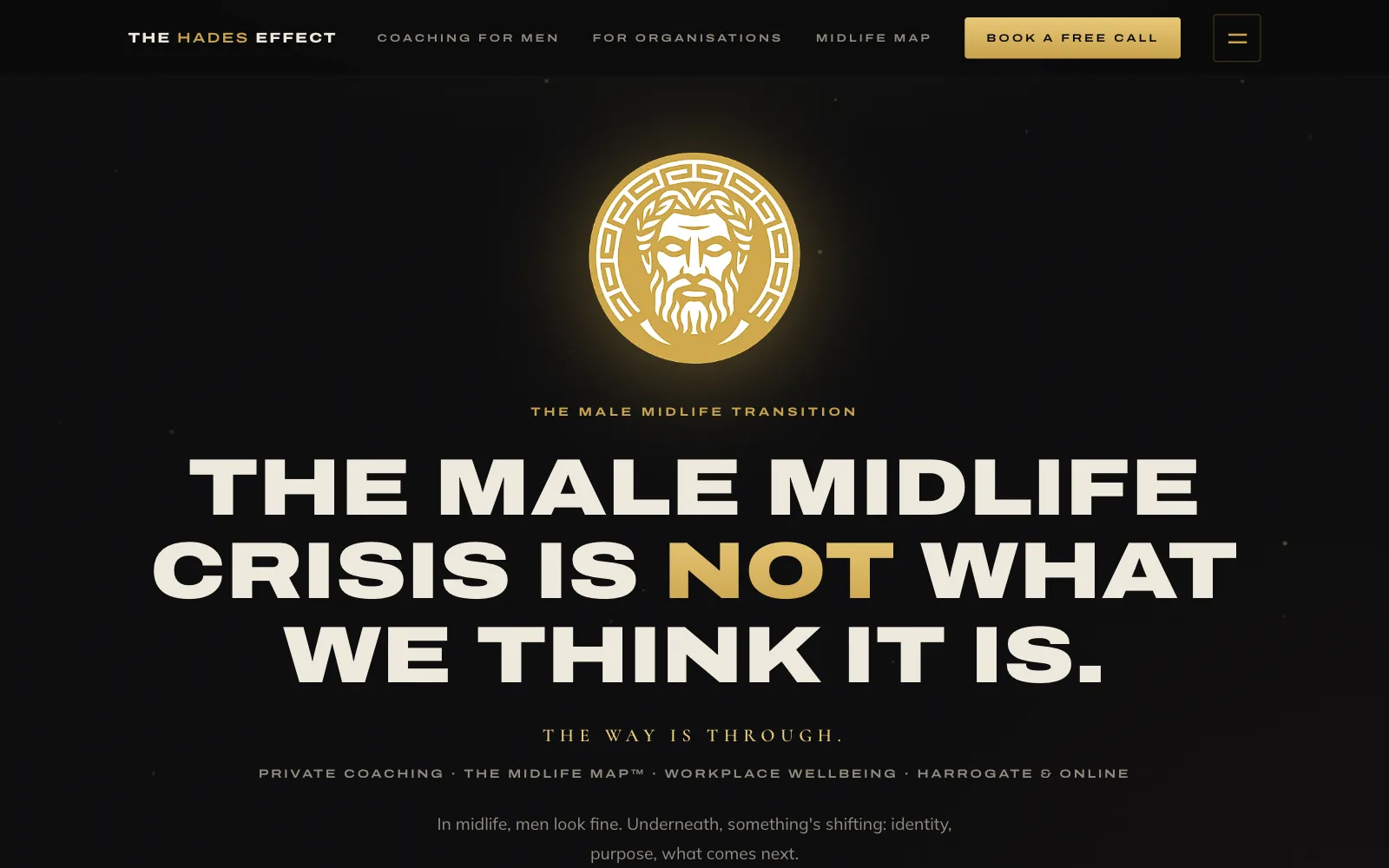
The Hades Effect is a midlife coaching practice for men, run from Harrogate and working with clients across the UK. When I came to it, the website was two pages: a landing page and a contact form. It looked fine and it did nothing. Nobody searching for help with a midlife crisis would ever have found it, because it did not say the words.
The job was to turn it into a site that could be found by the men it was for, without it ever feeling like a marketing site. This is a sensitive subject and the design had to respect that.
the rebuild
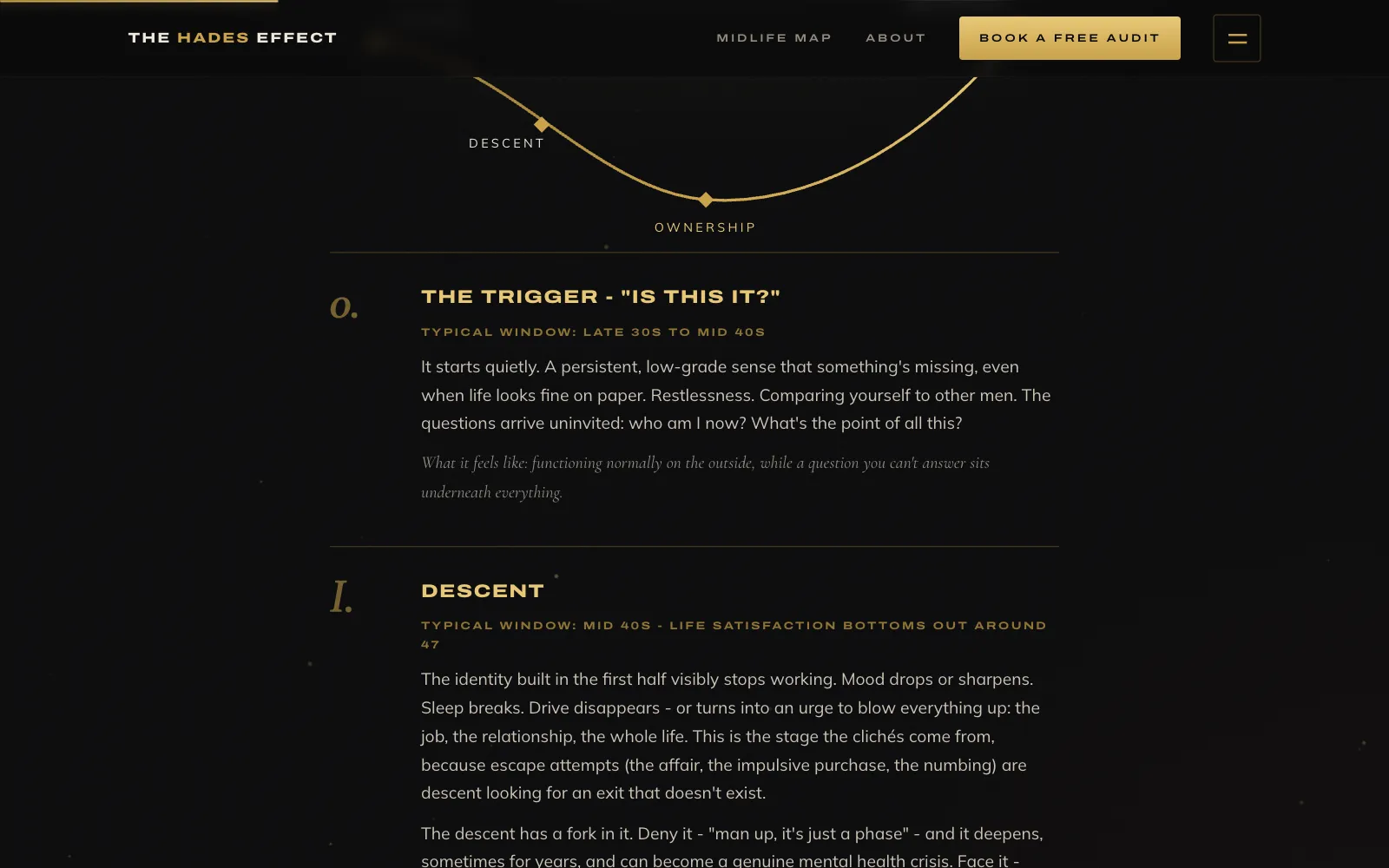
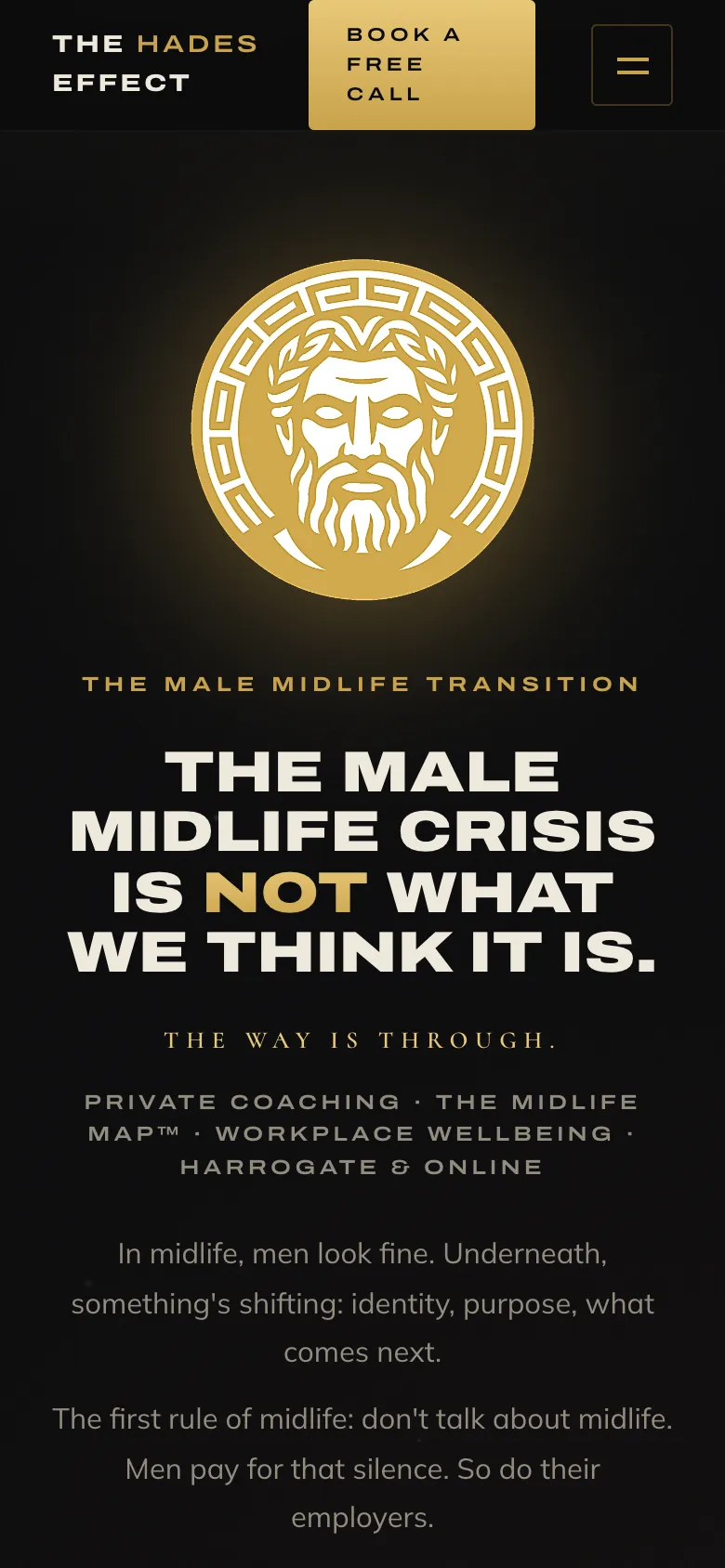
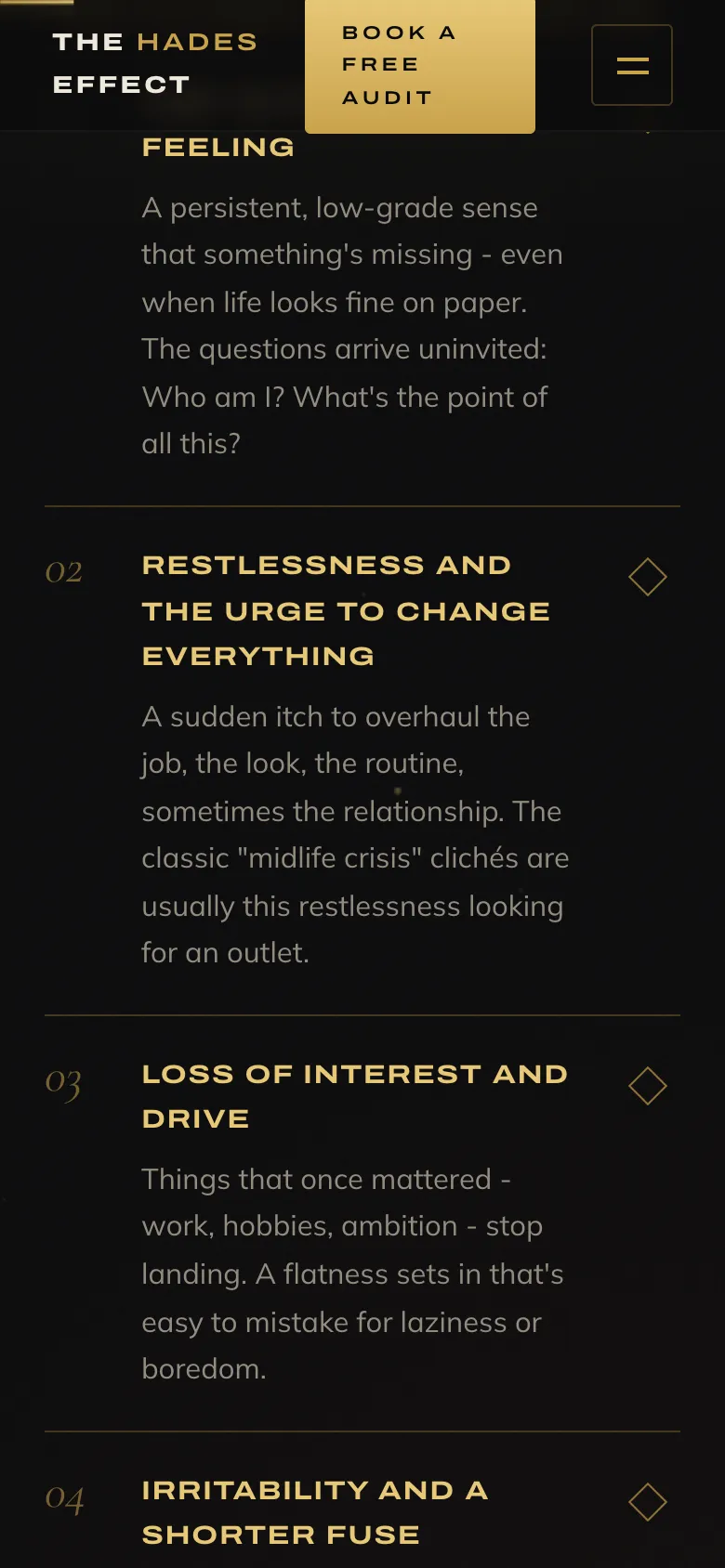
I rebuilt it from scratch as a hand-coded site: no templates, no page builder, nothing to slow it down. The look is cinematic and dark, with gold type, film grain and small details that reward slowing down, because the men this is for are not in a hurry to click a bright button.
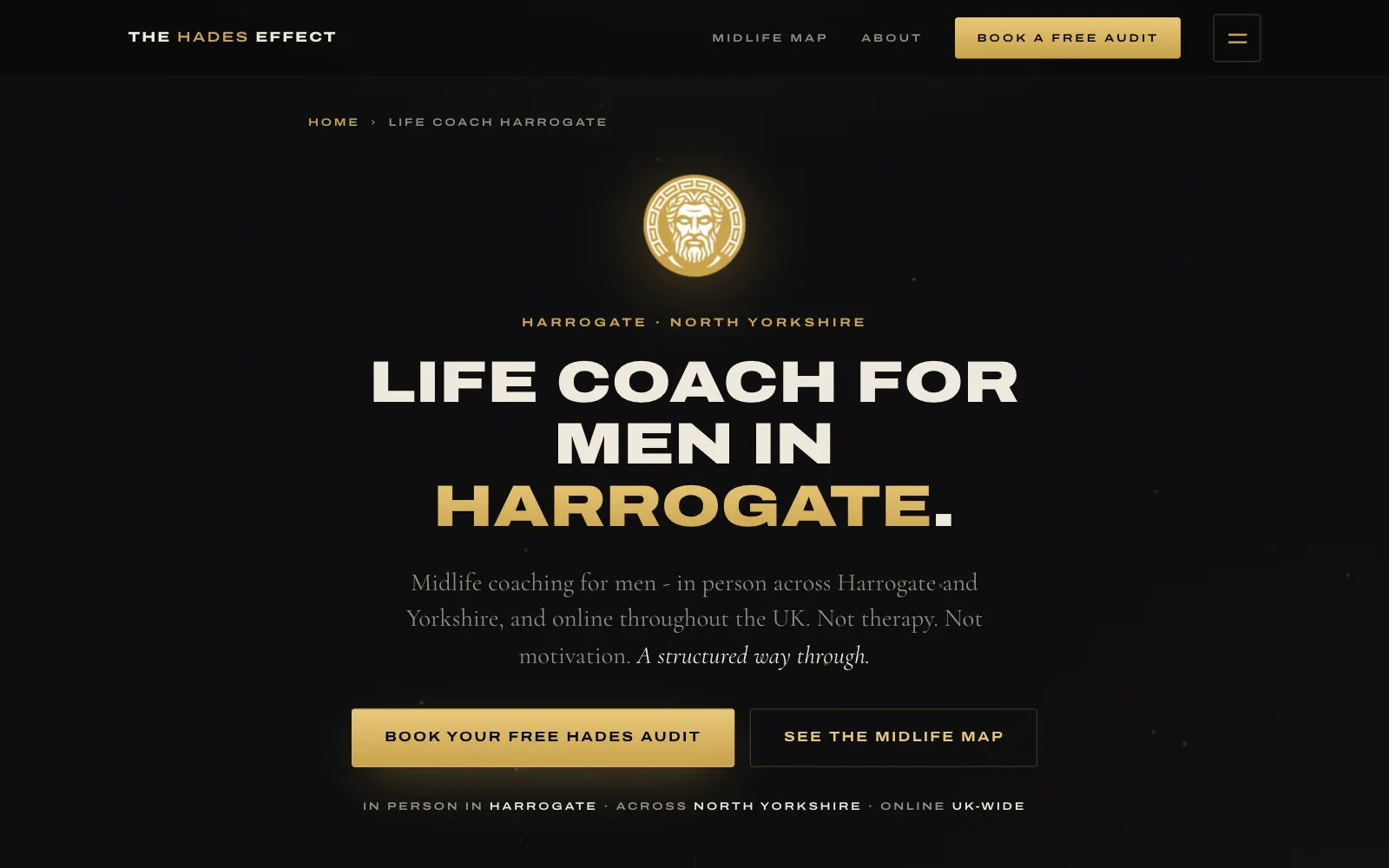
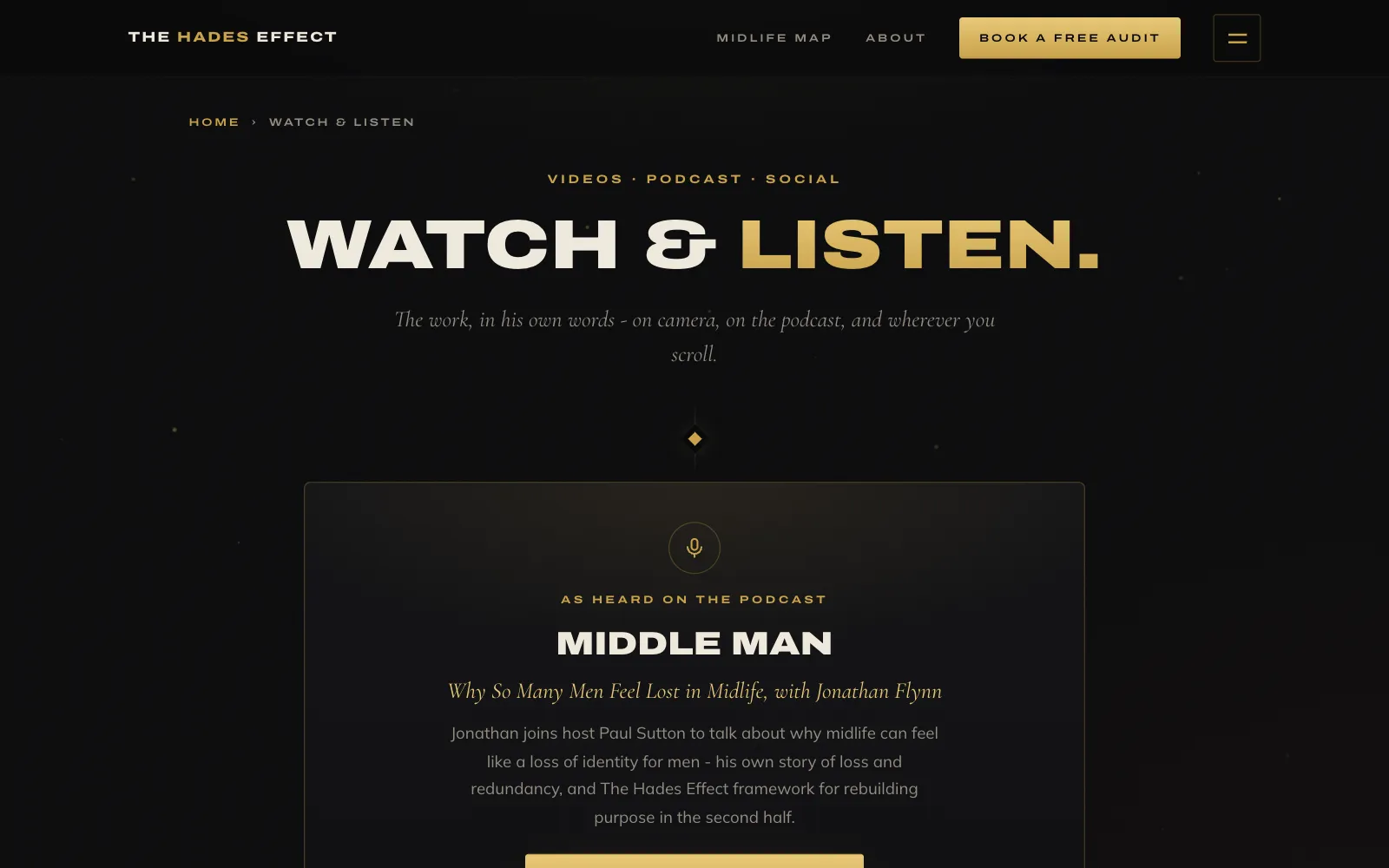
- Two pages became fifteen - a page for every question a man in this position actually types into Google, each one written in the founder's voice and checked by him
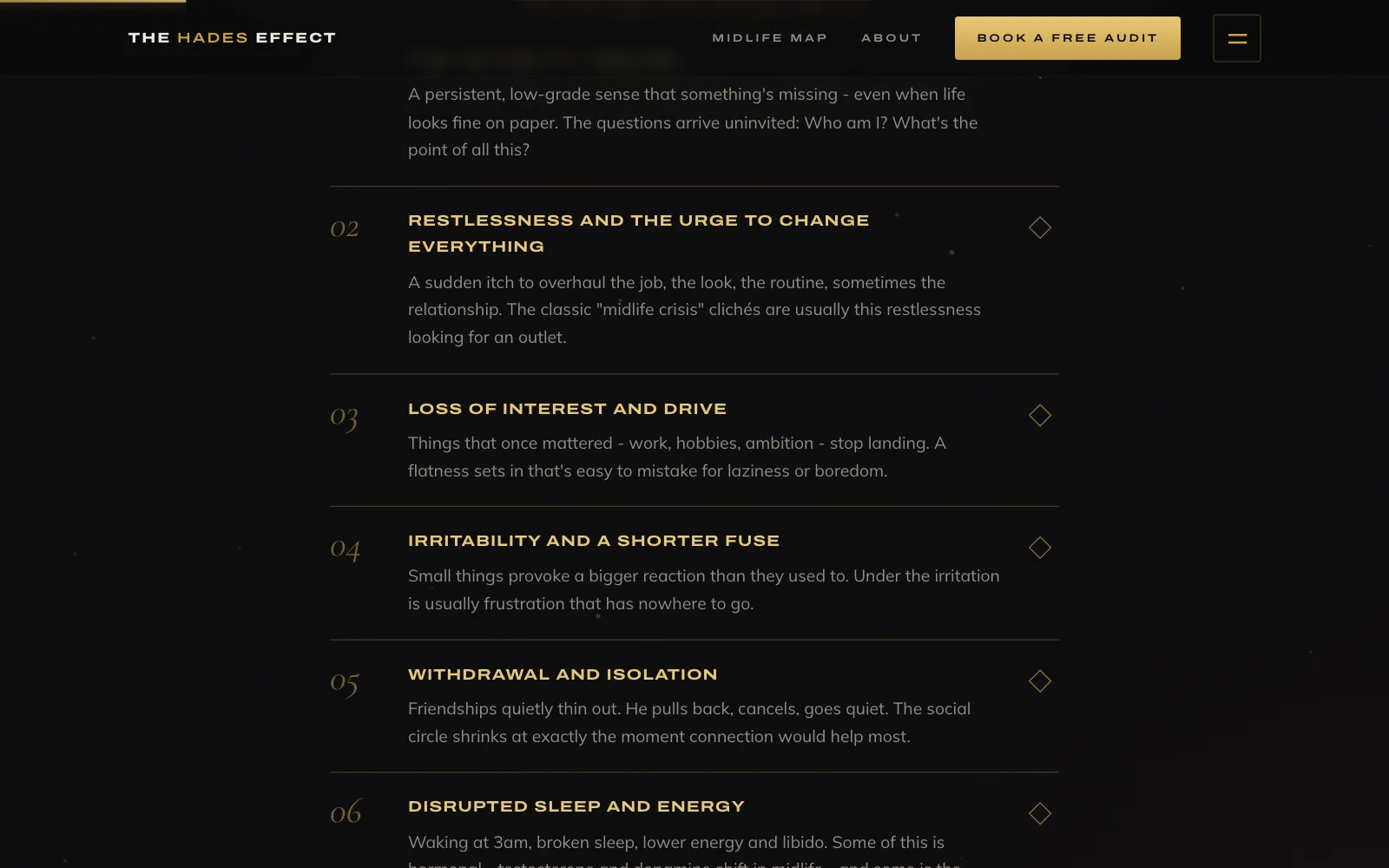
- Four long guides - symptoms, stages, how long it lasts, and one for partners, each around 3,000 words with real UK statistics and the right helplines
- A page for organisations - corporate speaking became a service line, with its own page and downloadable session overview
- Real reviews, not quotes - the homepage shows the practice's actual Google reviews, pulled through as they were written
things to do, not just read
A site about a difficult subject needs to give people something to do that is smaller than "book a call". So it has two.
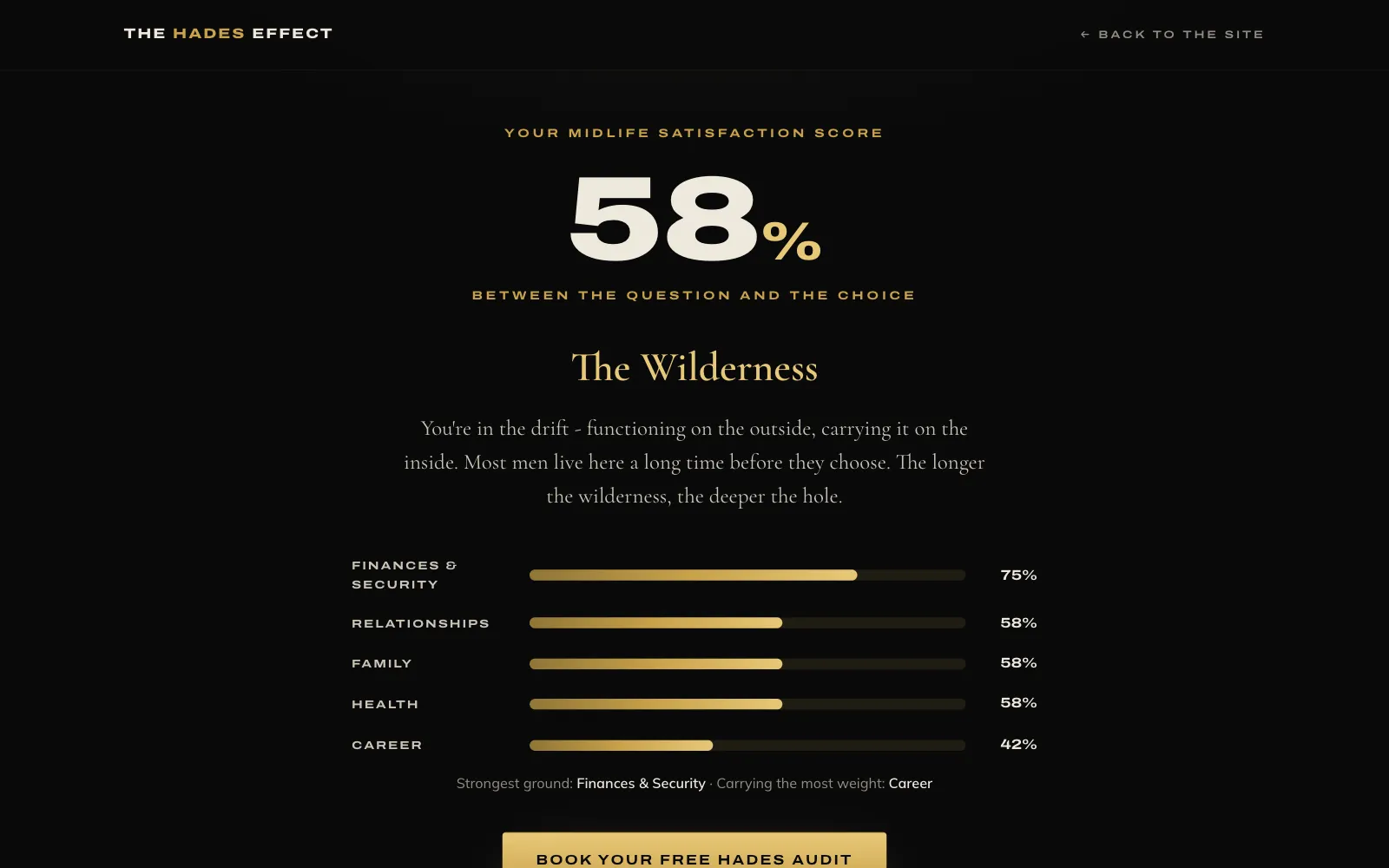
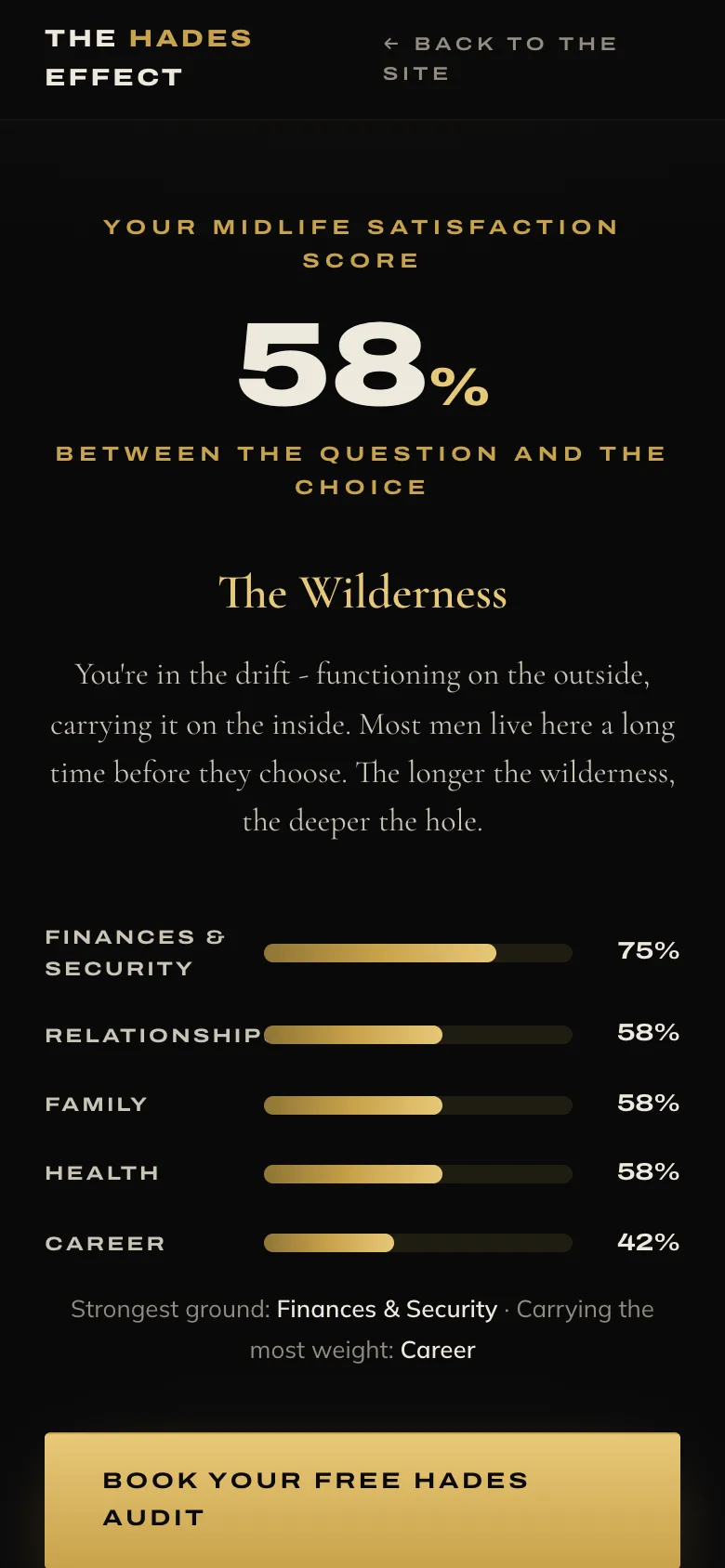
The Midlife Map Scorecard is a 20-question quiz that scores career, relationships, family, finances and health, places you on the practice's own map, and generates a report styled to match the worksheets clients get in sessions. It captures an email on the way through, which turned the site into something that brings in enquiries rather than waiting for them.
the seo work
Design gets a site looked at. This is what got it found:
- Every page mapped to a search - titles, headings and copy matched to the exact phrases men use, found by reading what they actually type
- Structured data throughout - so Google reads the practice as a local business, each guide as an article, and every FAQ as a question it can show directly
- Google Business Profile set up and verified - category, services, booking and reviews, so the practice appears in the map results for Harrogate
- Analytics with consent - so the founder can see which pages lead to bookings, done properly for UK privacy rules
- A hidden blocker, found and fixed - a setting at the hosting level was quietly stopping AI search engines from reading the site at all. Nobody would have noticed without checking
- A backlink plan - sixteen verified directories and associations relevant to coaching, in an order worth doing them in
the numbers
Before the rebuild, over six weeks the site was shown in Google 177 times and clicked 46 times, almost entirely by people who already knew the name.
- 4,765 times shown in Google in 28 days - 27 times the visibility, for searches by strangers rather than by name
- 20 different searches on page one - including the ones that matter most, like how long a male midlife crisis lasts and what the stages are
- The main guide at position 8.8 - shown 2,805 times in a month, for a question that gets asked at 3am
- The homepage at position 4 - with one in ten people who see it clicking through
Those are the figures to 1 October 2026, from Google's own Search Console. The first client who found the practice through search arrived via the page written for partners, which is exactly the route it was built for.
on a phone
still going
The site is looked after monthly. Since launch it has gained an online coaching page for clients outside the UK, a coaching-versus-therapy guide, an articles hub, and the Scorecard. Each new page is built from the search data of the last one, which is how a site keeps climbing after the launch excitement is over.
"I've already attracted new clients through the site."
Jonathan Flynn, founder, The Hades Effect · 5.0 on Google
what this shows
This is the one to look at if you run a business in Harrogate and your website is a brochure that nobody finds. The design matters, but the pages that brought in clients are the ones that answer the questions people were already asking. That is what SEO is when it is done by the person who builds the site: not a report, but pages.
start a project see all the work →